

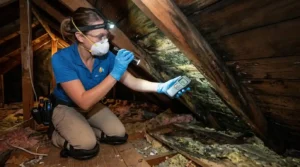
Florida’s sub-tropical climate is famous for sunshine, but it also delivers consistently elevated relative humidity levels. When indoor humidity crosses the 60% threshold, it creates an ideal environment for microscopic mold spores to settle, germinate, and multiply inside wall cavities, HVAC ducts, and behind furniture.
Uncontrolled fungal growth not only compromises structural components but also degrades indoor air quality. Learning how to spot mold under humidity before colonies spread allows you to take fast action and schedule professional mold remediation before health hazards and repair costs escalate.
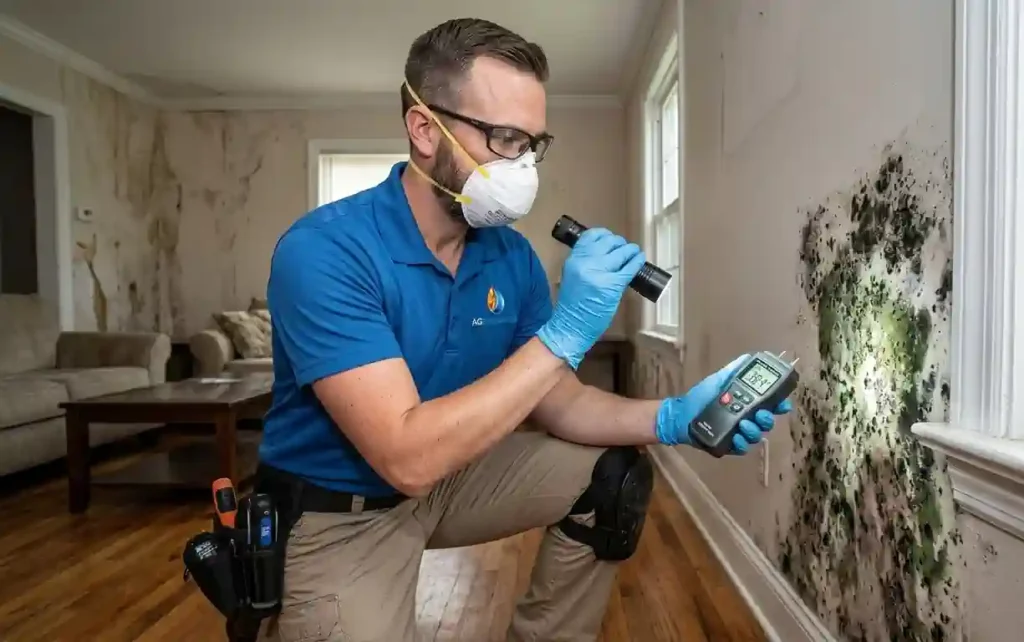
4 Sneaky Signs of Mold Growth in High-Humidity Environments
Because airborne spores thrive in dark, humid, and unventilated spaces, visible dark spots are often the last symptom to appear. Keep an eye out for these subtle indicator signs:
1. Persistent Musty or Earthy Odors
If a room or closet smells damp even after thorough cleaning, active microbial digestion is likely occurring nearby. Mold fungi release Volatile Organic Compounds (VOCs) as they feed on drywall paper and organic wood materials.
2. Discoloration on Drywall and Baseboards
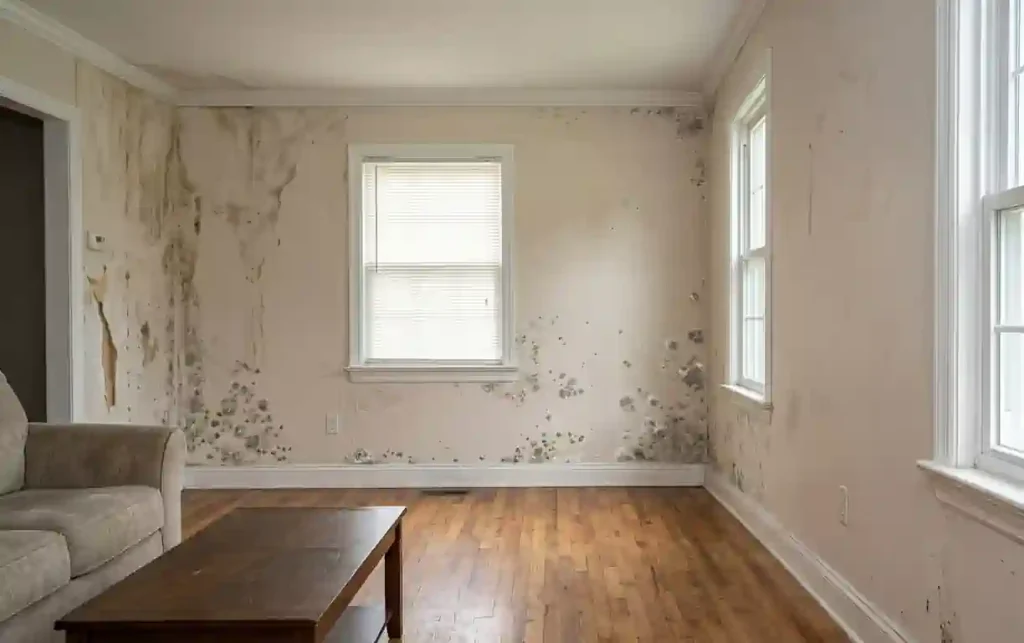
In high humidity, mold often manifests as faint yellowish patches, fuzzy white growths, or speckled black dots along baseboards, ceiling corners, or around air conditioning vents.
3. Bubbling, Peeling, or Flaking Paint
When high moisture vapor settles inside walls, it breaks the bond between paint and drywall. If wall paint is peeling or wallpaper is lifting without an active plumbing leak, high ambient humidity is trapping moisture behind the surface.
4. Warped Wooden Cabinetry and Furniture
High relative humidity causes wooden cabinetry under sinks, furniture legs, and door frames to swell, cup, or show surface discoloration, creating a nutrient-rich base for fungal colonies.
Why Dehumidification Is Critical for Mold Prevention in Florida
Simply wiping away surface growth with household chemicals will not solve a humidity-driven mold issue. Spores remain dormant in the air and will re-colonize the moment humidity rises again.
Effective containment and extraction require strict environmental control:
- Relative Humidity ($\text{RH}$) Control: Maintaining indoor levels strictly between 30% and 50% using industrial dehumidification.
- Air Scrubbing with HEPA Filtration: Capturing microscopic airborne spores down to 0.3 microns during containment.
- Antimicrobial Surface Treatment: Applying EPA-registered botanical or commercial fungicides to neutralize rooted hyphae.
Frequently Asked Questions About Humidity and Mold
What indoor humidity level triggers mold growth in Florida?
Fungal spores can begin germinating on porous surfaces in as little as 24 to 48 hours when indoor relative humidity remains consistently above 60%.
Can I just use bleach to clear mold caused by humidity?
No. Bleach only cleans non-porous surfaces like tile or glass. On porous materials like drywall and wood, the water content in bleach actually feeds the underlying roots (hyphae), causing the colony to return stronger.
Need Professional Mold Testing and Remediation in Florida?
Don’t let high indoor humidity ruin your home’s air quality and structural integrity. If you suspect hidden fungal growth behind your walls or vents, contact our Florida mold remediation specialists today for certified containment and biological hazard extraction.